
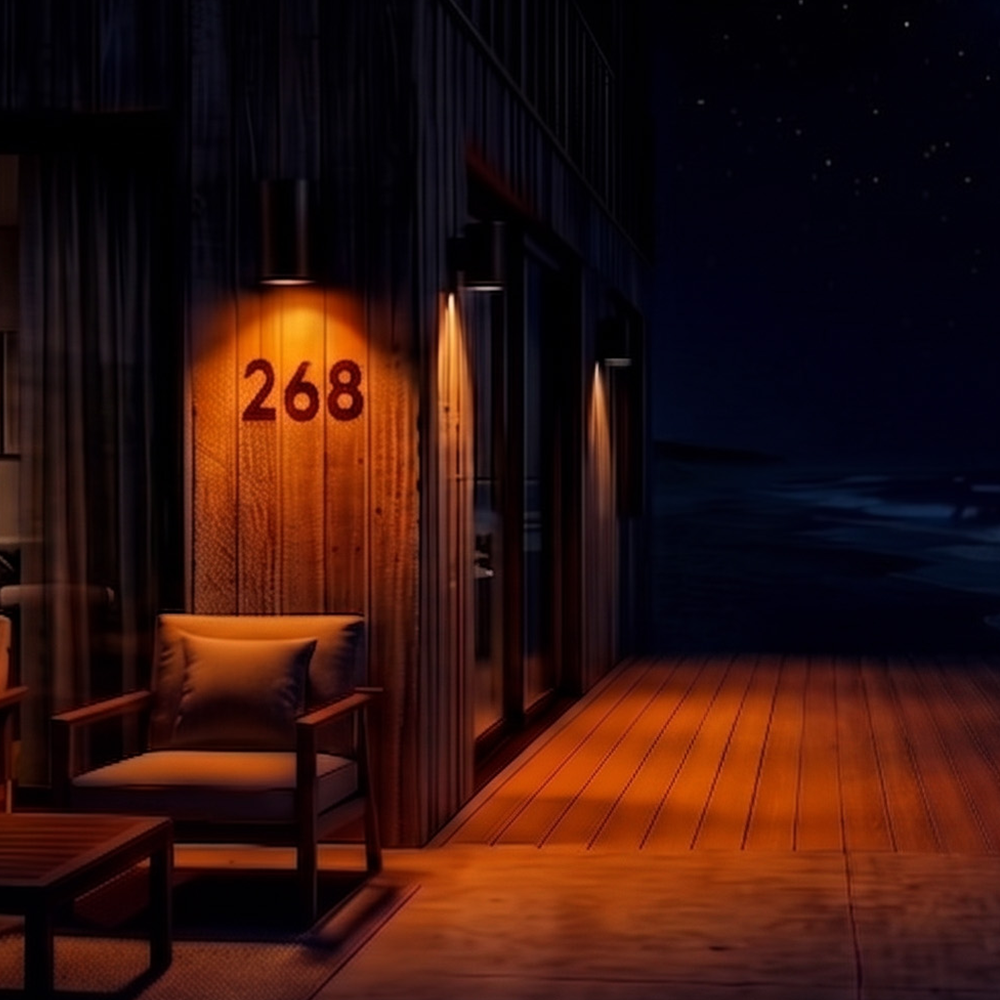
Your Outdoor Light Could Be Killing Sea Turtles. Or Protecting Them.
If you own or manage a property on or near Florida's coastline, your outdoor lighting isn't just an aesthetic choice. During the months of March through October, Florida's sea turtle nesting season, every light visible from the beach is either helping or harming one of the world's most ancient species.
The good news is that the fix is well-defined, science-backed, and more accessible than ever. Turtle-friendly lighting is a specific, certified standard that makes it possible to have safe, functional outdoor lighting without threatening nesting sea turtles and their hatchlings.
KASTLITE protects sea turtles. We partner with Sea Turtle Oversight Protection and donate 12% of every purchase. Browse our turtle-friendly lighting collection, or read why artificial light is one of the biggest threats to sea turtles.
So what exactly qualifies? What does Florida law require? And what should you actually look for when switching over?
This is the complete guide.
What "Turtle-Friendly Lighting" Actually Means
Turtle-friendly lighting isn't a vague marketing term. It's a technical standard established and enforced by the Florida Fish and Wildlife Conservation Commission (FWC), in partnership with the U.S. Fish and Wildlife Service and organizations like DarkSky International.
To be officially recognized as turtle-friendly, a lighting fixture must meet three specific criteria: all three, not just one or two.
1. Long-Wavelength Color (560nm or Higher)
This is the most critical element. Sea turtles are highly sensitive to short-wavelength light: the white, blue, and green spectrum that dominates most standard outdoor LEDs and incandescent bulbs. These wavelengths are the primary cause of hatchling disorientation and nesting disruption.
Turtle-friendly fixtures use long-wavelength light sources greater than 560 nanometers, specifically amber, orange, or red LEDs, without the use of filters, gels, or lenses. Filters are not acceptable because they allow the full short-wavelength spectrum to pass through and simply reduce its brightness, which doesn't solve the disorientation problem.
The practical result: a warm amber glow that illuminates your porch, path, or entryway effectively while operating on a frequency that sea turtles largely cannot perceive.
Short wavelength light sources, PC Ambers, RGBs, dual lighting boards, and color change options are not acceptable under FWC standards.
2. Full Cutoff Shielding
The second criterion is physical: how the light is contained. A turtle-friendly fixture must meet or exceed full cutoff defined as no light emitting above a 90-degree horizontal plane. In plain language, nothing shines upward and nothing scatters broadly in a way that's visible from the beach.
The fixture must be shielded so that the lamp or glowing lens is not directly visible from the shoreline. This rules out globe lights, carriage-style fixtures, exposed-bulb fixtures, and any design that broadcasts light in all directions.
Directional, recessed, and downward-pointing fixtures are preferred. Shields can be added to existing fixtures using aluminum flashing. Balcony lights can be fitted with shields that restrict illumination to the balcony itself.
3. Low Intensity Minimum Necessary
The third rule is about output: use the lowest wattage or lumen output necessary for the intended purpose, with the fixture mounted as low as possible.
Turtle-friendly lighting is not about eliminating illumination. It's about eliminating excess unnecessary brightness, unnecessary spread, unnecessary elevation. A motion-sensor light that activates only when needed is far preferable to a constant floodlight, even if both use amber LEDs.
Florida Law: What's Actually Required
Turtle-friendly lighting is not optional for many Florida properties. All species are protected under state and federal laws, and lighting ordinances are in place as part of these protections. Compliance is legally mandated.
Florida implemented Section 161.163 of the Florida Statutes, which requires the Department of Environmental Protection to designate coastal areas used by sea turtles for nesting and to establish guidelines for local government regulations controlling beachfront lighting.
The seasonal requirement typically runs from March 1 through October 31 the full nesting and hatching cycle. During this period, all artificial lighting visible from the beach must either be turned off or comply with the three-criteria standard above.
Penalties for non-compliance are real and escalating. Initial violations can result in fines ranging from $150 to $1,000, with daily penalties of $100 to $250 accruing until the property comes into compliance. Repeat offenders or violations that result in the disorientation or death of hatchlings face penalties that can exceed $200 per day.
Enforcement is handled by local code enforcement officers, county environmental protection staff, and the FWC. The process typically begins with a Notice of Violation giving the property owner 10 days to correct the problem.
Importantly, while Florida provides statewide model language through Chapter 62B-55 of the Florida Administrative Code, specific ordinances and enforcement vary at the county and municipal level. Many coastal counties have adopted their own strengthened requirements. In October 2024, the Miami Beach City Commission voted to strengthen its Turtle Nesting Protection Ordinance, adding prohibitions on motorized vehicles during nesting season and restricting special event lighting visible from the beach after 9 PM.
To check whether your county or municipality has an adopted lighting ordinance, the FWC maintains an interactive map at myfwc.com.
The Interior Lighting Problem Most People Miss
Exterior fixtures get most of the attention but interior lighting visible from the beach is an equally serious and frequently overlooked source of hatchling disorientation.
White lights inside buildings can be visible from the beach and are often much brighter than exterior lights. Interior lights can quickly turn a turtle-friendly building into one that causes disorientations.
Florida state rules require that tinted glass or film with a visible light transmittance (VLT) value of 45% or less be used on all glass windows, doors, and walls within line of sight of the beach typically the seaward and shore-perpendicular sides of structures. Notably, a 2025 study published in Marine Pollution Bulletin found that even the 45% threshold may be insufficient in some cases, suggesting that additional tinting or interior light management may be necessary for properties with significant beach-facing glass exposure.
Practical steps for interior lighting compliance include drawing curtains and blinds on beach-facing windows after dark, switching interior lamps to lower-intensity bulbs, and considering warm amber-tone smart bulbs in rooms with ocean-facing windows.
FWC Wildlife Lighting Certification vs. Dark Sky Certification
Two certification programs are most relevant for Florida coastal properties and while they overlap, they have distinct standards.
FWC Wildlife Lighting Certification is the Florida state standard. Fixtures certified through this program have been evaluated by the FWC and confirmed to meet the three-criteria standard: long-wavelength color, full cutoff shielding, and low intensity. A list of FWC-certified fixtures and bulbs is maintained on the FWC website and updated regularly. Compliance with a certified fixture is the clearest way to demonstrate regulatory adherence.
DarkSky International Sea Turtle Sensitive Certification applies a more stringent technical standard for manufacturers. DarkSky-certified sea turtle lighting requires a 565nm monochromatic amber light source specifically (not a range), no uplight (BUG U-0 rating), a pre- or post-installation shielding option, dimming capability to 10% of full output, photometric and spectral power distribution measurements, and independent laboratory safety certification.
Both certifications are valid for sea turtle protection purposes. The DarkSky standard is technically more specific and is recognized internationally. Either certification on a fixture gives you confidence that it has been verified not just claimed to be turtle-safe.
The Kastlite Turtle-Safe Amber LED Wall Sconce and AmberLED Aeroform Bollards carries both Dark Sky approval and Florida Wildlife Conservation compliance and its amber LED technology is documented in detail in Kastlite's 2026 Sea Turtle Lighting Compliance Report.
What to Look For When Shopping
When evaluating any outdoor lighting fixture for coastal use, here's a practical checklist:
Color spectrum: Does the product specifically state long-wavelength amber, orange, or red LED with wavelengths above 560nm? "Warm white" is not the same as amber warm white LEDs still contain short-wavelength components that disorient sea turtles.
Certification: Is it listed on the FWC's Certified Wildlife Lighting page, DarkSky Sea Turtle Sensitive certified, or Florida Wildlife Conservation approved? Look for explicit certification, not just brand claims.
Shielding: Is the fixture full cutoff with a shielded lens? Avoid globe lights, lantern-style fixtures, or anything with an exposed bulb that scatters light in multiple directions.
Lumen output: Is the output appropriate for the intended use enough to illuminate your space safely, but not excessive? More lumens is not better in a sea turtle protection context.
Mounting height: Can the fixture be installed low to the ground or wall? Lower installation reduces the area over which the light is visible from the beach.
How Turtle-Friendly Lighting Ties Into Broader Conservation
Switching to turtle-friendly lighting is one of the most direct, immediate actions a coastal property owner can take for sea turtle conservation but it doesn't happen in isolation.
Florida hosts approximately 90% of all sea turtle nesting in the United States, with nearly 100,951 loggerhead nests recorded on index beaches in 2025 alone. The Executive Director of the Sea Turtle Conservancy has estimated that well over 100,000 hatchlings are disoriented and die each year in Florida from artificial lighting a number that is almost certainly an undercount given the limited coverage of monitoring programs.
Organizations like Sea Turtle Oversight Protection (S.T.O.P.) work on the ground to offset what proper lighting prevents. Their all-volunteer patrols cover Fort Lauderdale Beach nightly from May through October, monitoring nests, rescuing and releasing disoriented hatchlings, and documenting the events for FWC. To date, S.T.O.P. has rescued more than 300,000 hatchlings in Broward County alone.
Turtle-friendly lighting removes the problem at its source. Organizations like S.T.O.P. respond when the problem still occurs. Both matter, and both need support.
Make the Switch
If you're ready to bring your outdoor lighting into compliance and into alignment with the ecosystem you share with sea turtles the path is straightforward:
-
Identify all outdoor fixtures and interior windows visible from the beach
-
Replace or modify any non-compliant fixtures using FWC's three-criteria standard
-
Choose certified fixtures look for FWC Wildlife Lighting Certified or DarkSky Sea Turtle Sensitive
-
Close curtains on beach-facing windows after dark during nesting season
The Kastlite Turtle-Safe Amber LED Wall Sconce is a certified, Made-in-USA option that meets all three FWC criteria delivering 400 lumens of amber illumination in a weather-resistant, non-corrosive housing built for the coast. And with every purchase, 12% of profits goes directly to Sea Turtle Oversight Protection's conservation work on Florida's nesting beaches.
Shop the Kastlite Turtle-Safe Light
To learn more about light pollution and sea turtle conservation, or to support the volunteers working Florida's nesting beaches, visit seaturtleop.org.
Frequently Asked Questions
What color light is safe for sea turtles?
Amber, orange, and red LEDs operating at wavelengths above 560 nanometers are considered turtle-safe. These long-wavelength light sources fall largely outside the visual spectrum that sea turtles respond to. Standard white, blue, and "warm white" LEDs all contain short-wavelength components that disorient nesting females and hatchlings.
Is turtle-friendly lighting required by law in Florida?
Yes. Florida law under Section 161.163 of the Florida Statutes requires coastal properties to comply with sea turtle lighting guidelines during nesting season, generally March 1 through October 31. Local counties and municipalities may have additional or stricter ordinances. Fines for non-compliance range from $150 for initial citations to daily penalties of $100-$250 or more.
What is FWC Wildlife Lighting Certified?
This is the Florida Fish and Wildlife Conservation Commission's official certification program for fixtures and bulbs that meet sea turtle protection standards. Certified products have been evaluated against FWC's three-criteria standard: long-wavelength color above 560nm, full cutoff shielding, and minimum necessary intensity. The FWC maintains an updated list of certified fixtures on its website.
Can I just use a filter or gel to make my existing light turtle-safe?
No. Filters, gels, and lenses are not acceptable under FWC standards because they allow the underlying short-wavelength spectrum to pass through just at reduced brightness. The issue is the wavelength of the light source itself, not just its intensity. The bulb must be replaced with a true long-wavelength amber LED.
Does turtle-friendly lighting work well enough for safety and security?
Yes. Turtle-safe amber LED fixtures deliver full, functional illumination for driveways, entryways, decks, and pathways. The Kastlite Turtle-Safe sconce, for example, provides 400 lumens comparable to a standard porch light in a UL Listed, weather-resistant housing. Turtle-friendly lighting is a replacement for standard lighting, not a downgrade.
Sources: Florida Fish and Wildlife Conservation Commission (FWC), Florida Department of Environmental Protection, DarkSky International, Kastlite Sea Turtle Lighting Compliance Report 2026, Sea Turtle Oversight Protection (S.T.O.P.), Broward County Natural Resources