
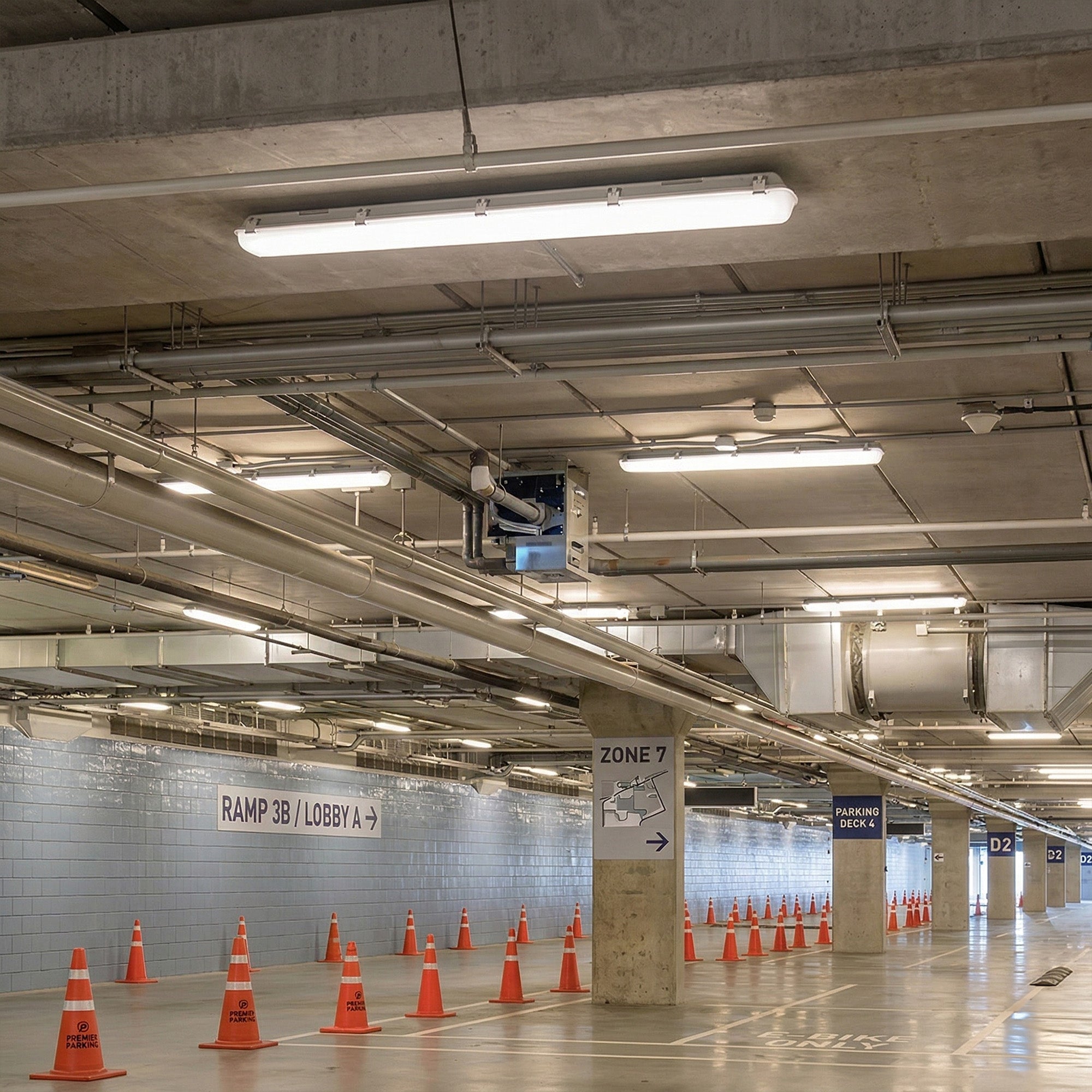
Lighting performance doesn’t depend on the fixture alone, the lens plays a critical role in how light is distributed, how comfortable it feels, and how long the entire system lasts.
Wraparound lenses are widely used in commercial, institutional, and industrial ceiling fixtures. They provide wide light distribution, protect internal components, and create a clean, finished appearance. Choosing the right wraparound lens ensures better light quality, improved durability, and long-term value.
If you’re replacing an old lens or specifying one for a new lighting project, understanding the differences in material, diffusion level, and performance characteristics will guide you to the best choice.
What Is a Wraparound Lens?
A wraparound lens is a curved diffuser that extends around the sides of a ceiling-mounted light fixture. Unlike flat panels, which direct light only downward, wraparound lenses allow illumination to spread outward and downward for broader coverage.
These lenses are commonly used in offices, schools, retail environments, parking structures, warehouses, and healthcare facilities. They are especially popular in linear fluorescent and LED fixtures because they soften glare, distribute light evenly, and eliminate harsh shadows. For more information, see the UL lighting safety standards.
The curved design also protects the internal light source from dust, debris, and accidental contact.
For example, the DSB48 48" Prismatic Acrylic Wraparound Replacement Lens is designed for common 4-foot wraparound fixtures used in classrooms, garages, and office spaces. It restores brightness and even light distribution while protecting the fixture components.
Why the Wraparound Lens Matters
The lens directly affects light quality, visual comfort, and fixture lifespan. A poorly chosen lens can lead to glare, uneven light distribution, or premature yellowing and cracking.
The right wraparound lens reduces glare, hides LED hotspots, distributes light evenly throughout a space, and maintains clarity over time. It also contributes to the overall appearance of the fixture, providing a clean, professional finish.
In commercial and institutional spaces, lighting comfort directly impacts productivity and occupant satisfaction, making lens selection more important than many assume.
Acrylic vs. Polycarbonate: Which Material Is Better?
The two most common materials for wraparound lenses are acrylic and polycarbonate. Each offers specific advantages based on performance needs and environment.
Acrylic lenses provide excellent clarity and superior light diffusion. They resist yellowing and are cost-effective for most indoor commercial applications. Acrylic works well in offices, retail stores, schools, and hospitality spaces where impact resistance isn’t a primary concern.
Polycarbonate lenses are known for their high impact resistance. They are significantly stronger than acrylic and perform well in demanding environments such as industrial facilities, manufacturing spaces, and parking structures.
For environments that require additional durability or protection, products like the Clear Polycarbonate Vandal Resistant Light Lens provide strong impact resistance while maintaining good light distribution.
Choosing between acrylic and polycarbonate depends on environmental conditions, durability needs, and budget.
At KASTLITE, we offer both acrylic and polycarbonate lighting lenses to match a wide range of commercial and industrial requirements.
How Light Diffusion Affects Performance
The diffusion level of your wraparound lens determines how light spreads throughout a room.
High-diffusion lenses soften light significantly and hide individual LED sources, creating smooth, uniform illumination with minimal glare. This type of diffusion is ideal in environments where visual comfort is critical, such as offices and healthcare facilities.
Lower-diffusion lenses allow more direct light transmission, resulting in brighter output. These are often used in industrial settings where maximum illumination and task visibility are priorities.
Balancing light transmission and diffusion ensures that your space achieves both brightness and comfort without wasting energy. For more information, see the U.S. Department of Energy.
Compatibility With LED Fixtures
Many older wraparound fixtures were originally designed for fluorescent tubes. When upgrading to LED systems, the lens must be compatible with the directional output of LEDs.
LEDs produce light from small, concentrated sources, which can create visible hotspots and uneven lighting without proper diffusion. A well-designed wraparound lens blends LED output into a smooth, even glow.
If you are performing an LED retrofit, replacing the lens at the same time dramatically improves the final result. Upgrading the diffuser boosts uniformity, enhances efficiency, and gives the fixture a more modern appearance.
Durability and Environmental Considerations
Different environments require different levels of durability. In high-traffic areas or industrial facilities, impact resistance is essential. Polycarbonate lenses are often preferred in such settings.
For spaces exposed to humidity or moisture, sealed or vapor-resistant lenses can help maintain lighting clarity. For example, the ALP‑TMW4D15 Vapor Proof Lens Replacement is designed for wet or humid environments such as garages, workshops, and utility areas.
Shop collection here: https://kastlite.com/collections/vapor-proof-lenses
Selecting materials that resist UV exposure, heat, and moisture helps extend the life of the lens and reduces long-term maintenance costs.
Aesthetic and Design Considerations
Wraparound lenses come in various finishes, including clear, prismatic, and frosted styles. The finish affects light distribution and visual appeal.
Prismatic designs enhance light spread and reduce glare. Frosted finishes provide softer diffusion and hide internal components more effectively. Clear lenses maximize brightness but may expose internal LEDs more obviously.
The design should complement the aesthetic of the space while delivering functional lighting performance.
When Should You Replace a Wraparound Lens?
Over time, lenses can yellow, crack, warp, or lose clarity. This reduces light output and negatively impacts the overall appearance of the fixture.
If your space appears dim even after bulb or LED replacements, the lens may be the real issue. Replacing an aging lens often restores brightness and improves energy efficiency without the need to replace the entire fixture.
For businesses looking to modernize lighting without extensive renovations, upgrading the wraparound lens is a cost-effective solution.
How to Choose the Right Wraparound Lens
Selecting the right lens involves evaluating several factors: fixture type, light source, environmental conditions, required diffusion level, and long-term durability needs.
Commercial offices and retail stores typically prioritize visual comfort and clarity, making acrylic high-diffusion lenses a strong choice. Industrial facilities often prioritize impact resistance and strength, making polycarbonate the better option.
Need help choosing the right thickness for your wraparound lens? Our thickness guide has specific recommendations for light covers.
Trimming a polycarbonate diffuser to fit? Our cutting guide explains which blade and speed to use for clean results.
Not sure of your wraparound dimensions? Our light cover measurement guide walks through the three measurements you need.
Partnering with an experienced lighting manufacturer ensures proper fit, material selection, and long-term performance.
At KASTLITE, we specialize in durable replacement lighting lenses designed for commercial and industrial applications. Whether you need a standard replacement or a custom solution, our product specialists can help you select the right material and finish for your ceiling fixture.